You ask a coding agent to add image upload to your app. It ships in four minutes and the tests pass. It also picked your format, your dimensions, your alt text policy and your file naming scheme, and you were asked about none of it.
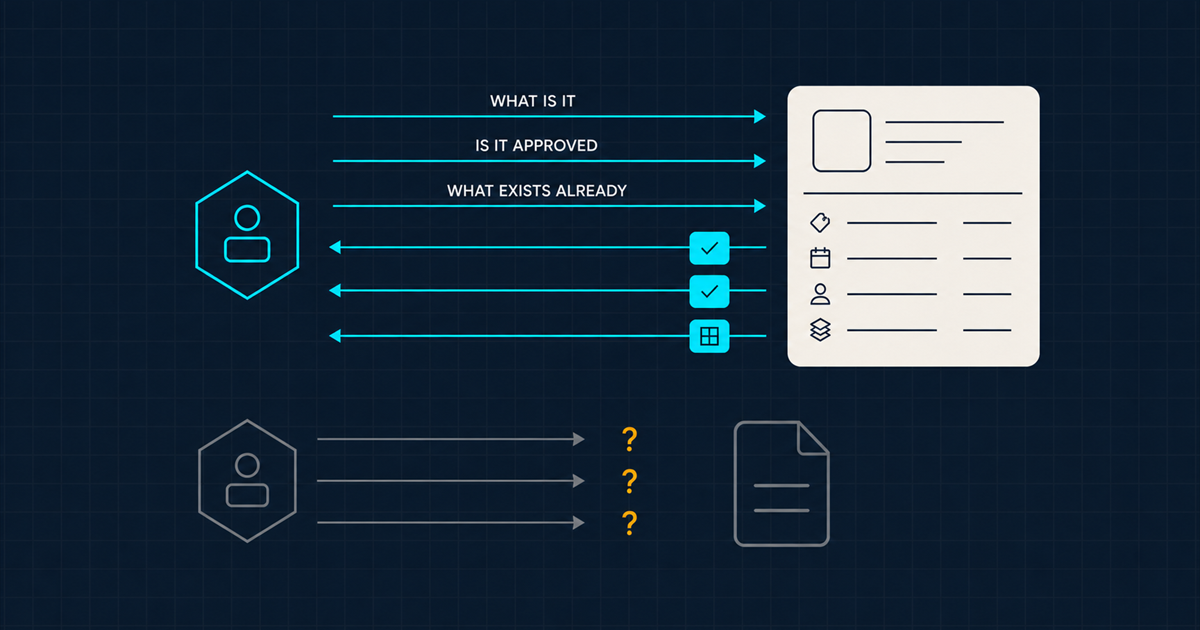
Short answer: an agent holding a structured media object can check what an asset is before it acts. An agent holding a file in a bucket has to guess, and it guesses silently, differently every session. The fix is not better prompting. It is giving the agent something it can query: typed fields, approval state, and a list of what already exists. Cloudinary ships that as five MCP servers over asset management, environment config, structured metadata, analysis and MediaFlows, so the agent asks instead of assuming.
The four guesses
Hand an agent an upload task and a storage bucket and watch what it decides.
Format. It keeps whatever the source was, or picks PNG because PNG feels safe. It has no way to know whether the browser requesting this image supports AVIF, and no mechanism to find out later.
Dimensions. It stores what you gave it. A 4032 by 3024 phone photo goes in at full size and comes back out at full size, because nothing in the pipeline knows the layout renders it 400 pixels wide.
Alt text. It writes an empty string, or the filename, or something invented from context. The third is the worst, because it looks correct in review and describes an image nobody checked.
Naming. It invents a convention on the spot, something like uploads/${userId}/${Date.now()}.jpg, will not remember it next session, and will invent a different one the session after.
None of these are bugs. Each is the correct output of a process with no information available to it.
Why can’t the agent just be told?
You can tell it. It works until the context window ends.
An agent has no memory across sessions, no ability to inspect what it cannot see, and no way to verify a convention it did not create. Conventions carried in a prompt are the weakest possible storage medium: they decay, they conflict with the last person’s prompt, and they cannot be checked against reality.
The durable version is to put the knowledge on the asset instead of in the instruction. That is the difference between telling an agent “always use the approved logo” and letting it run a query that returns only approved logos. The first is a hope. The second is a constraint.

The three questions worth answering
In practice an agent needs exactly three things from an asset system, and everything else is convenience.
What is this? Type, subject, dimensions, dominant colour, what is depicted. Enough to choose a crop and to write a description that is true. Most of this can be generated at ingest by automated analysis rather than typed by a person, which matters because agents create assets faster than humans describe them.
Am I allowed to use it here? Approval state, licence, expiry, moderation status. This is the question with real consequences and the one a file cannot answer at all. Note the honest limit: approval state on the asset is not the same as fine-grained per-asset permissions, and you should check what any platform actually enforces rather than assuming the field is a gate.
What already exists? The single biggest waste in agent-driven media work is re-deriving variants that were generated last week, because nothing told the agent they were there. A search API that answers “give me every derivative of this original” removes an entire class of duplicated work. Cloudinary exposes this through the Search API and the Admin API.
Answer those three and the guessing stops. Leave any of them unanswerable and the agent fills the gap with invention.
How MCP changes the shape of this
The Model Context Protocol matters here for a boring reason: it standardises how a tool describes itself to a model. An agent connecting to an MCP server gets a typed list of the operations available and the arguments each one takes, rather than a documentation page it has to interpret.
That turns “figure out how to call this API” into “call the operation that exists”. The protocol specification covers the transport and the contract. What it does not do is make your metadata good. An MCP server over an empty schema returns empty fields very efficiently.
This is worth stating plainly, because MCP is currently being sold as a solution to a problem it does not touch. The protocol solves discovery and invocation. Whether the answer is useful is entirely a function of whether your assets are described.
Guardrails beat instructions
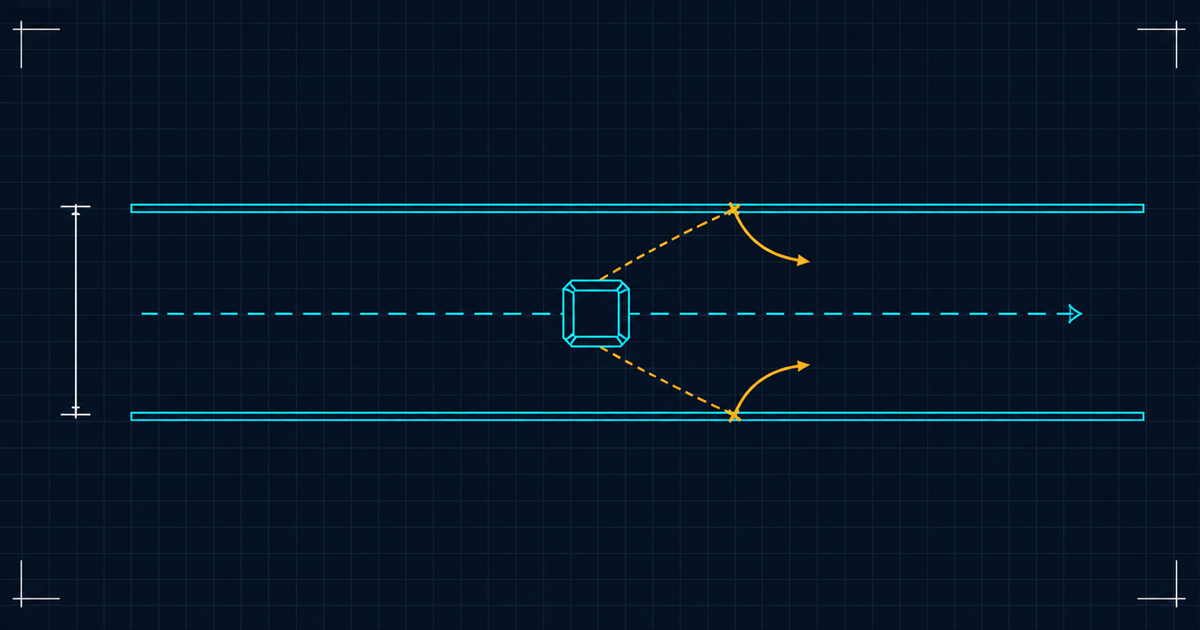
The pattern that holds up in production is to make the wrong action unavailable rather than discouraged.
- Constrain at the API, not in the prompt. An upload preset that pins format, size limits, folder and required fields applies whether or not the agent remembered the rule.
- Derive at delivery, never at upload. One stored original plus transformation parameters means the agent cannot create a wrong permanent variant, because variants are not permanent.
- Require the description field. If alt text has to exist before an asset is usable, the agent cannot ship an empty one.
- Return existing derivatives on query. Cheapest possible fix for duplicated work.
None of this is agent-specific engineering. It is ordinary API design that happens to matter far more when the caller cannot be reasoned with after the fact.
Where this actually bites
Not at scale. On the first build.
A team with a media specialist and a review step catches a bad crop before it ships. A two-person team building with a coding agent has no review step, and the agent is the architect. The decisions that used to be made slowly by someone with context are now made immediately by something with none, and they end up in the repository as facts.
That is the argument for choosing a media layer on day one rather than treating it as something you graduate into. The mechanics of doing that from a developer’s side are in headless DAM, and the honest version of when you can skip it entirely is in do you need a DAM yet. If you want the underlying model first, what digital asset management actually is covers it.
Related field note
Continue with How to measure controlled vocabularies.