Know what you have. Use it well.
Digital asset management brings order, context and control to the images, videos and files your team relies on. Learn what matters before you choose a system.
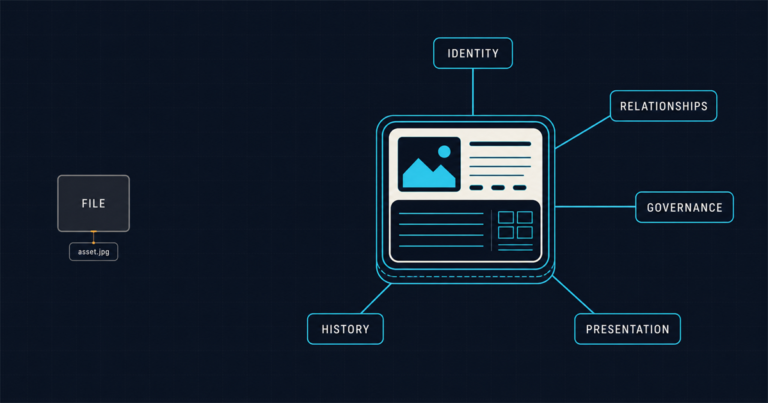 IDENTITY / 01
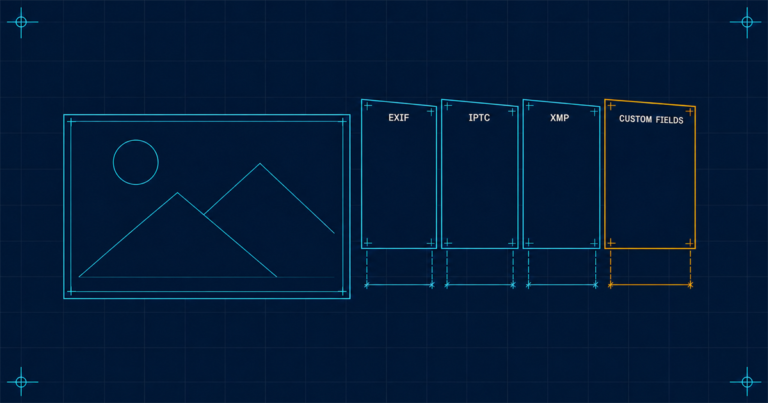 CONTEXT / 02
 DELIVERY / 03
Start with the right question.
A useful DAM starts with a clear problem. These guides help you find the line between a well-run folder and a system worth adopting.
What is digital asset management?
The practical difference between storing a file and managing an asset.
↗ THE DECISION / 02Do you actually need a DAM?
Work through the signals, costs and cases where a simpler setup is enough.
↗ THE SHORTLIST / 03Compare platforms by fit.
See which kind of system makes sense for your team and workflow.
↗Explore by topic.
Move from the fundamentals to the details that make an asset library reliable.
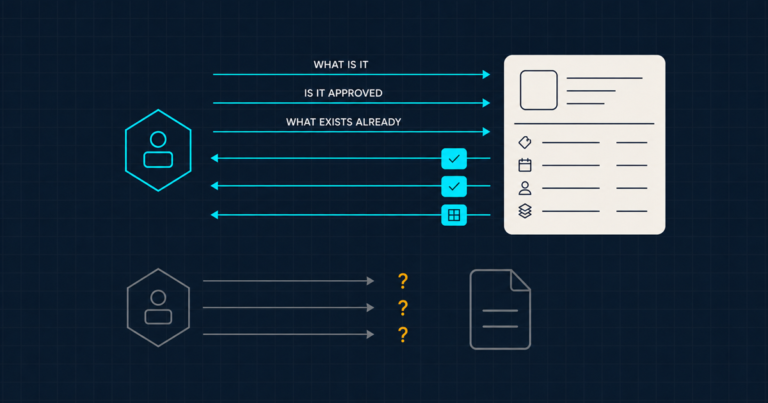
A file tells you where it is. An asset tells you what to do with it.
Descriptions, rights, approval state, versions and delivery rules should travel with the asset. When that context stays attached, people and software can find and use the right thing without reconstructing its history.
Read the guide to metadata ↗From the library.
Answers for selecting a platform, moving an archive and designing an asset record people can trust.