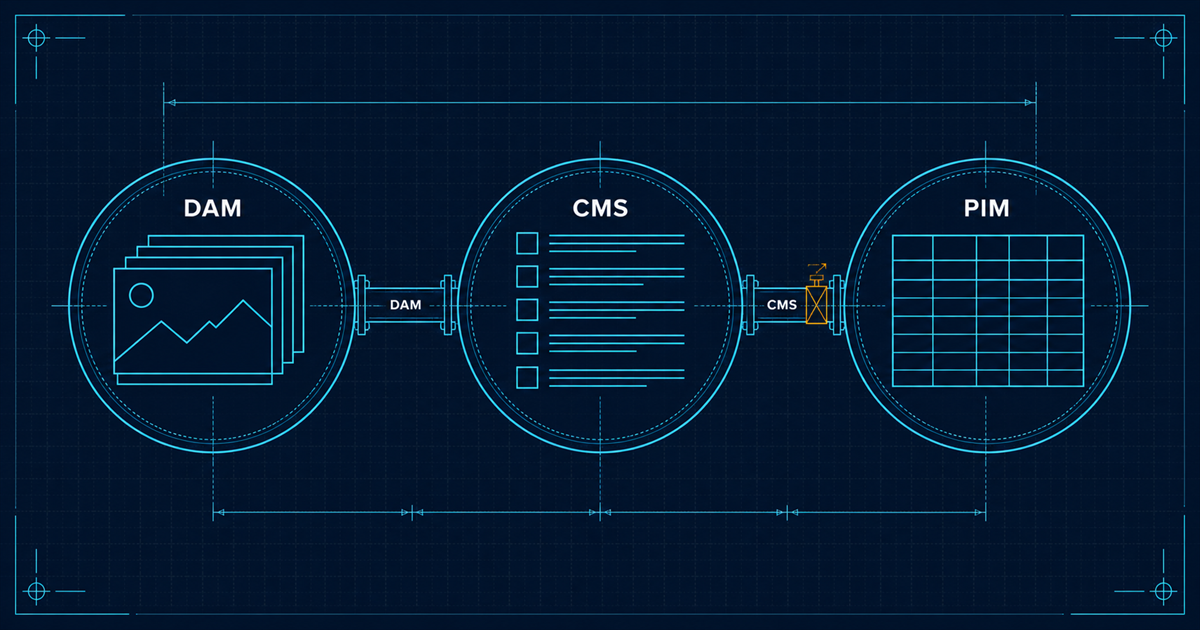
Every content stack argument is the same argument. The CMS has a media library, the DAM has a publishing surface, the PIM stores product images, and three teams each believe they own the photo.
Short answer: ask which system is the source of truth for a given fact, and the boundaries draw themselves. A DAM owns facts about the asset. A PIM owns facts about the product. A CMS owns facts about the page. An asset appears in all three, and only one of them is allowed to be authoritative about what it is, who shot it and whether it is cleared. Platforms built to be the asset source of truth, like Cloudinary Assets, expect the other two to reference them rather than to copy from them.
The one-line version of each
DAM. Source of truth for the asset. Holds the original, the description, the rights, the version history and the rules for deriving variants. Knows nothing about your product catalogue and does not need to.
PIM. Source of truth for the product. SKU, attributes, variants, descriptions, pricing structure, channel-specific data. Product information management exists because the same product needs different attribute sets for a marketplace, a retailer feed and your own site. Open source implementations like Akeneo’s community edition are a reasonable way to see the data model without a sales call.
CMS. Source of truth for the page. Structure, layout, editorial copy, navigation, publication state of content. Modern headless options such as Sanity and Strapi make the boundary clearer than traditional CMSes did, because they force you to model content rather than pages.
Every one of them will happily store an image. Only one of them should be believed about it.
The test that settles arguments
When two systems both hold a fact, ask: if this fact changes, where does the change originate, and what has to update?
The photographer credit changes because the photographer told you. That originates at the asset. DAM.
The product description changes because marketing rewrote it. That originates at the product. PIM.
The image moves from the top of the page to a sidebar. That originates at the page. CMS.
If the answer is “it originates in two places”, you have a design problem, not an integration problem, and no amount of syncing will fix it. Pick one owner and make the other read.

Where do teams get this wrong?
Four failure patterns, in rough order of how often I see them.
Product images living in the PIM. It feels natural because the image belongs to the SKU. It breaks the moment a photo is used in a campaign that is not product-specific, or when the same shot covers three SKUs, or when legal needs to find every asset from a particular shoot. The PIM should hold a reference to the asset, not the asset.
Marketing assets living in the CMS media library. The library contains only what the site uses. Everything unpublished, retired, or destined for a channel that is not your website is invisible to it. You end up with two libraries and a rule nobody follows about which is which.
The DAM used as a publishing tool. Some platforms encourage this and it works until you need real page composition. A DAM’s job ends at delivering the right variant to whatever asked. Layout is not its problem.
Everything in one system because integration is hard. Understandable and usually the most expensive choice available. The consolidated tool is excellent at one of the three jobs and adequate at the other two, and you discover which one about eighteen months in.
What the integration actually looks like
Cleanly separated, the flow is unremarkable.
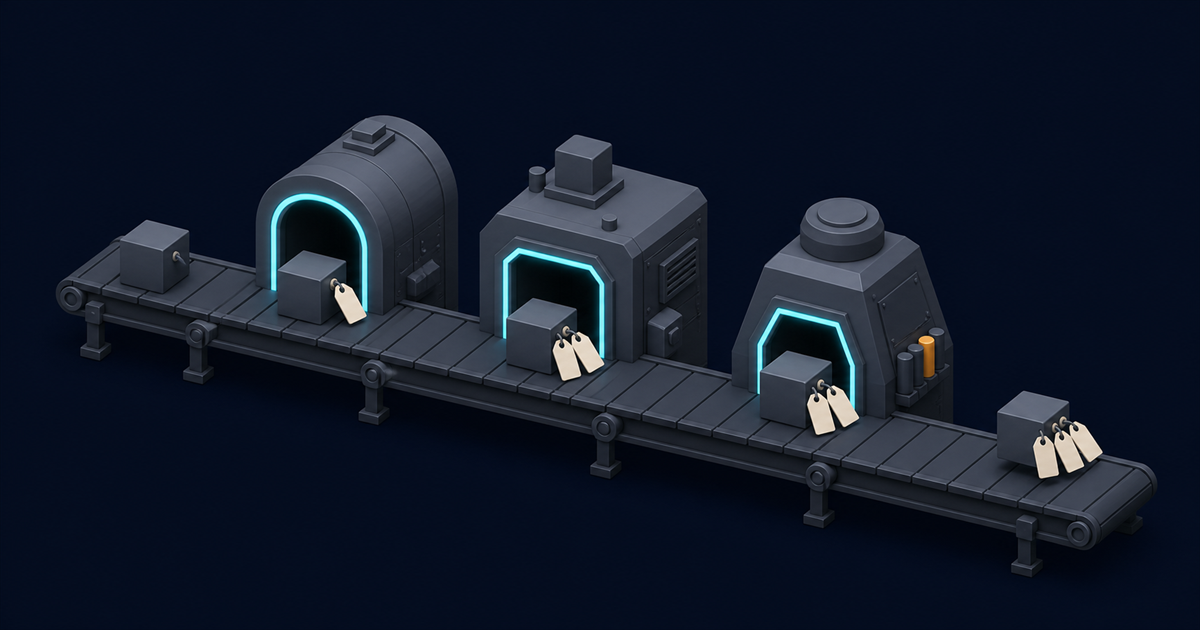
The DAM holds one original per asset, described once. The PIM holds product records, each referencing asset identifiers rather than copies. The CMS holds page structure, referencing product records and asset identifiers. Nothing downstream stores an image file; everything stores a reference plus the transformation it needs.
That last part is what makes the model practical rather than theoretical. If a variant is a URL parameter rather than a stored file, then a CMS asking for a 16:9 crop and a PIM asking for a square packshot are both just requests against the same original. Cloudinary’s transformation reference is one implementation of that idea; the principle matters more than the syntax. When the master is retouched, every surface updates, because no surface was holding a copy.
The case for fewer systems
I have argued the separation, so here is the honest counterweight.
Three systems means three vendors, three data models, three sets of permissions and an integration layer that somebody owns. For a team of fifteen selling forty products, that is absurd overhead and the correct answer is one tool doing all three jobs adequately.
The separation earns its cost when any of these are true: your catalogue is large enough that product data has its own lifecycle, your assets are used across channels you do not control, or you have licensing exposure that makes “where is every use of this photo” a question with legal weight. Below that, consolidate and revisit later.
If you are trying to work out whether you are above or below that line, do you need a DAM yet is the specific version of the question, and what a DAM costs has the numbers side.
Start from the fact, not the feature list
Feature comparisons between these three categories are close to useless, because the overlap is enormous and every vendor has checked every box. The useful exercise takes an afternoon: list the twenty facts your organisation needs to be right about, and assign each one an owner. Most stacks fall out of that list, and the arguments stop.
For the asset half of that list, what digital asset management actually is sets out what belongs on the asset. If your conclusion is that you need something API-first that other systems reference rather than a destination people log into, headless DAM is the shape you are looking for, and the platform comparison sorts vendors by which of these jobs they are actually built for.